What's the Difference Between an Electronic Signature,
Digital Signature and an Electronic Seal?
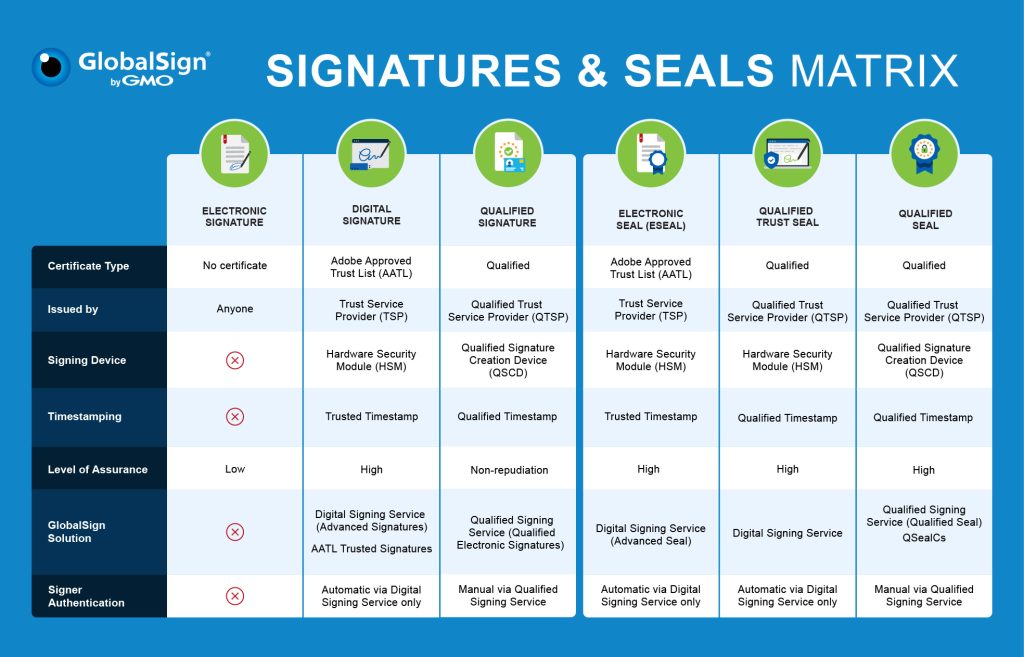
An electronic signature refers to any data (such as a signature) applied electronically, rather than using traditional ink on a physical document.
However, an electronic signature does not verify the content of a document nor does it offer security or assurance regarding its authenticity.
A digital signature is an electronic signature that is supported by a digital certificate, offering verified proof of identity.
Digital signatures meet global regulatory standards and provide the highest level of identity assurance. They are cryptographically linked to the signed document and can be verified to ensure authenticity and integrity.
An electronic seal is used to securely sign on behalf of an organization rather than an individual.
Similar to a digital signature, electronic seals are cryptographically linked and verified by a trusted third-party. They are ideal for signing documents in large volumes, ensuring the authenticity of the entity and the integrity of the document.
What Signing Solution Do I Need?
Documents Signed with Confidence, Integrity, and Assurance
Consider the significance of a signature and its importance to you and your business. As the modern counterpart to signing documents with paper and pen, digital signatures offer enhanced customer confidence, improved experience, and stronger trust in your business operations.
There are many reasons to introduce and integrate digital signatures into your business processes, including increased efficiency, streamlined regulatory compliance, and heightened security. By adopting digital signatures, your business can simplify workflows while maintaining the highest standards of trust and protection for both your organization and your clients.
Are you interested to become Globalsign Malaysia partner?
Become a valued member of our community and unlock exciting opportunities. Connect, grow, and make an impact—start your journey with us today!